
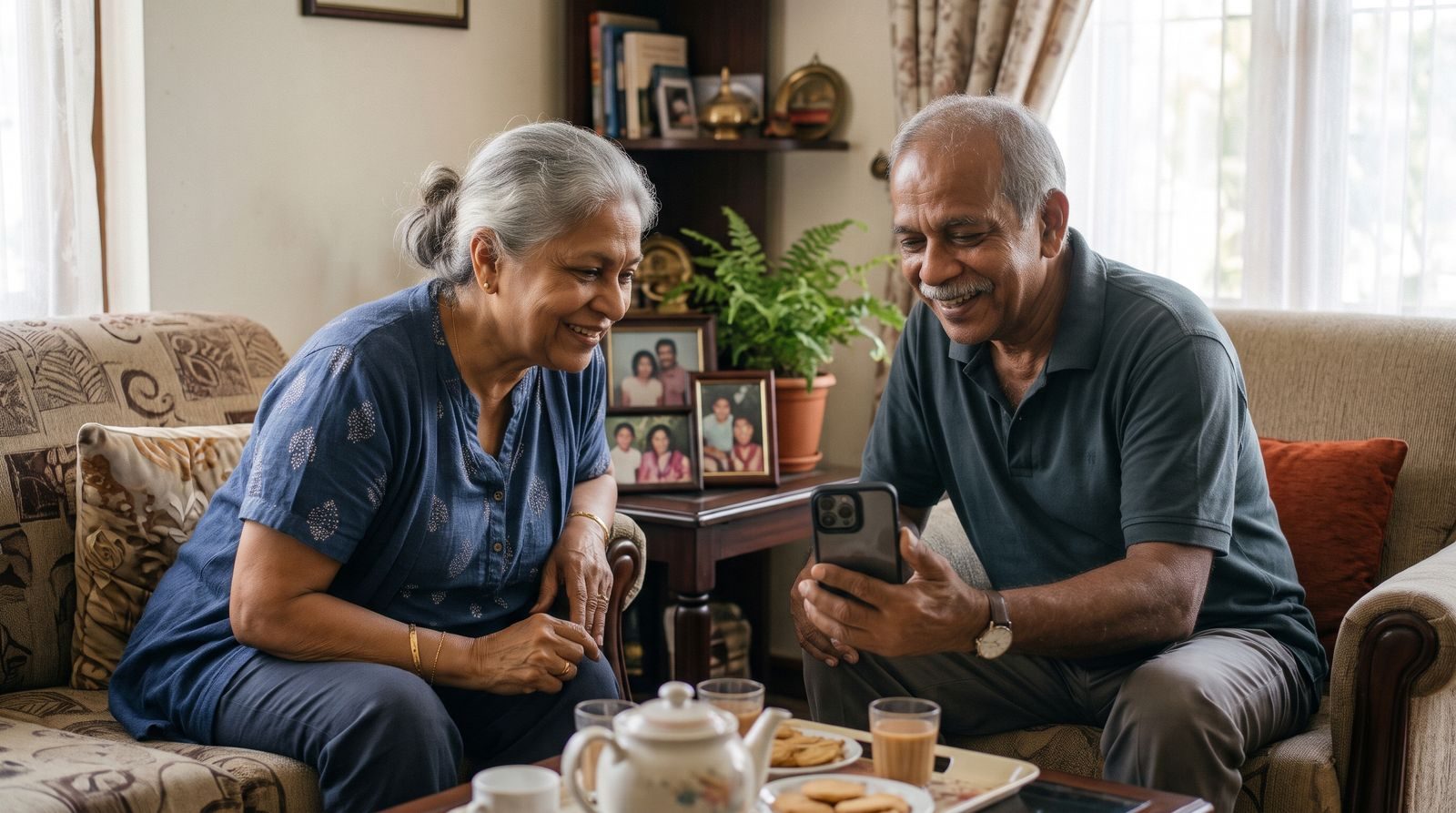
Being far away when parents or relatives in Sri Lanka grow older or fall ill is one of the hardest parts of living abroad. This page brings together practical steps that help: getting emergency help quickly, arranging care at home, checking care homes, handling money and staying close from a distance.
Quick answers
- In an emergency: call 1990 for the free Suwa Seriya ambulance, anywhere in Sri Lanka.
- Care at home or a nursing home: check that private hospitals, nursing homes and nurses are on the Private Health Services Regulatory Council's lists.
- Day-to-day help: a trusted local contact who can visit is worth more than anything you can do from abroad. See our Choosing trusted people guide.
- Money: send support through regulated channels and keep records. See our Sending money home guide.
Plan before there's an emergency
A little preparation now saves panic later. With your relative's agreement, put together a simple 'care file' that you and a local contact can both access:
- Their National Identity Card number and copies of key documents.
- Their doctor's name and number, and the hospital they would prefer to go to.
- A list of their medicines and any conditions doctors need to know about.
- A folder of recent medical reports and prescriptions that can be handed to a doctor or ambulance crew, plus photos of them on your phone and your local contact's phone.
- Contact details for neighbours, nearby relatives and a trusted local contact.
- Who can make decisions or access accounts if they can't, and whether any power of attorney is in place (see our Documents guide).
From experience
- A single folder of medical reports and prescriptions saves precious time in an emergency. Keep photos of the key pages on your phone too, so you can share them with a doctor instantly from abroad.
Emergencies: the 1990 ambulance
1990 Suwa Seriya is a free, island-wide emergency ambulance service run under the Ministry of Health. Anyone can call 1990 from any network, or use the 1990 mobile app.
- It's for emergencies only: it takes patients to hospital, not to clinics or back home.
- It can't be booked in advance, and it doesn't transfer patients between hospitals.
- Make sure your relative, their neighbours and anyone caring for them know the number.
Good to know
- From abroad you can't call 1990 directly, so agree in advance who on the ground will call it, and keep their number handy.
Back-up plan
- Note the number of a private ambulance service near your relative's home, in case a 1990 ambulance isn't available quickly.
- Keep the numbers of friendly neighbours who could help in an emergency.
- If a carer looks after your relative, ask them to keep a small hospital bag ready with clothes and essentials.
Care at home
Many families arrange a live-in or daily helper, a visiting nurse, or both. Before you agree anything:
- Check a nurse's name on the Private Health Services Regulatory Council's list of nurses, and ask any agency whether it's registered with the council.
- Agree duties, hours, pay, days off and notice in writing.
- Ask for regular updates, and arrange for a relative or neighbour to visit now and then.
- Follow the checks in our Choosing trusted people guide for references and payments.
Signs that care may not be good enough
- Higher pay doesn't always mean better care or better-trained carers, so keep an eye out, especially when a carer is new.
- Poor hygiene, such as rashes or sores.
- Your relative seems drowsy or asleep much more than usual, which could mean they're being given extra medicine to keep them calm. Ask their doctor if you're worried.
- Sudden weight loss after a new carer starts, which could mean they're not being fed properly.
- Ask a friend or relative to visit unannounced now and then.
- Make regular video calls so you can see and hear any changes for yourself.
Care homes and elders' homes
If your relative needs more care than can be provided at home, visit any home in person or ask a trusted relative to visit before deciding. Questions worth asking:
- Is the home registered with the relevant authority, and can they show you the certificate?
- Are there nurses on site, and is a doctor on call?
- How are medicines stored and given?
- Which hospital do they use in an emergency, and how do they get residents there?
- Can you video-call your relative, and how often will the home update you?
Money and bills
- Send money through a regulated provider into your relative's or a trusted person's bank account. See our Sending money home guide.
- Pay regular bills such as electricity, water and phone online where you can, so there's a record.
- Keep receipts for medical costs and any care arranged on your relative's behalf.
Staying close from a distance
- Set a regular time for video calls, so your relative has something to look forward to.
- Help them set up a smartphone and WhatsApp, and ask a local contact to help when it stops working. See our Staying connected guide.
- Plan visits home around birthdays, festivals or medical appointments, when your help counts most.
Neighbours and a watchful eye
- Share your contact details with neighbours and keep theirs. Sri Lankans are helpful by nature, and good neighbours will often look out for your family while you're away.
- When you visit, take a small token of thanks. A small gesture can mean a lot.
- If you can, install one or two basic CCTV cameras, for example at the main entrance and in the room where your relative spends most of their time, with their agreement.
Small things that make a big difference
- Make time for calls, even short ones at awkward moments. A quick hello can mean a lot to someone who's lonely.
- Think about comfort and company: something as simple as a bigger TV can help with loneliness and boredom.
- If your relative can't easily get to a clinic, arrange for a doctor to make home visits for regular check-ups.
- Falls can change an older person's health quickly, so make sure someone goes with them when they walk.
- Help them keep up their faith: a carer could play pirith, hymns or prayers each day, and religious TV channels can be watched on a phone from bed. See srilankan.tv for Sri Lankan channels.